📸 The State Of The Camera Industry
What Really Happened To It…In Truth… And
📸 — The Black Box Revolution —
Simple, Powerful, Long Lasting, Upgradeable
📸 — Slides 2 Digital —
Save Those Precious Images Into A Modern Format
📸 — Random Stories and Journalism
Years following and Chasing News
This Is Part of AlJacobs.Com Photography
— I Am Technically Retired, But Offering Some Services —
- Forty-eight plus years of supporting Photography have literally come to an end — It’s a new era and unfair competition, supplies, costs, market share and manufacturers — gone — I had no choice. But as long as I can get parts I will do repairs and upgrades if able.
- According to recent reports, 1) Sony, 2) Canon, and 3)Nikon, in order of sales, are the only three camera companies predicted to survive the Smart Phone revolution. Fujifilm is reducing its footprint but will still support the industry with cameras and supplies. Sales of small point and shoot cameras have declined, and sales of mirrorless cameras have not met expectations.
Unavoidable
- The demise of the photo market by various reasons to the digital world — Cell Phone - Internet- Social Media —
- The rise of social media and cell phones — Shot, send, job is done. And no time for the camera store which has been replaced by the PC and home printer if needed. Ninety percent merely go on to a drive, no printing.
- Newer strobes are powered differently — And have blocks to prevent anything other than proprietary gear —
- The rise and change to Lithium, is another total story. ( Cheaper and Chinas Owns Most of it — Cobalt)
- Business is based on wants, an audience, their needs, change and supply. All three affected the industry
- Covid -17 Pandemic affected the Photographic Industry. My end user was the professional photographer serving our society. Holidays, Weddings, Gatherings, Concerts, Sports, even Birthdays and Anniversaries, Conventions all, are affecting high volume shooters. COVID and The Economy shrunk the market to nothing sustainable —
- And those who distribute components I use have doubled prices some even though they aren’t receiving product. Fifty ships with products are sitting in the West Coast Ports unable to unload. One caught on fire and twenty-three containers went into the drink.
- The other problem is the junk the Chinese are shipping over filling gaps, when they do ship, pots and pans sell better than Photographic Supplies. TV shows sell stuff cheap because they are direct from China and no costs of US offices, warehouses or distribution.
- I will try to accommodate repairs and or upgrades providing I can get the parts. It’s sad, I used to have a 120 day supply of parts and now I see empty bins. I also said as long as my hands and brain works I will repair my products if parts are available. I make a promise, I keep it.
- I don't like operating in a very limited phase as our several suppliers of critical parts I need and machined for no longer exist. They were friends as well as suppliers. I gave up searching for replacements. Our boxes from Denmark dried up — I will not build with Chinese junk — Batteries from China, not affordable, quality concerns are real and availability because of shipping problems —
Quantum cables are not easily available — Nor in production anymore for our needs — They are pushing their expensive stuff and prices have double for repairs and upgrades. - I am still upgrading Black Boxes — If your strobe is still working, just upgrade the pack and keep shooting. The new stuff is extremely overpriced. Listed are some of the companies no longer existing, I don’t really know you can call it and industry anymore as the bigger businesses are in to chip, medicine and artificial Intelligence now.
- REST IN PEACE - Apple - Acer - Chinon - Concord - Cool-iCam - Contax - HP Photos-mart - Imacon - Intel - Konica - Konica Minolta - Largan - LG - Minolta - Maxell - Microtek - Olympus - Sanyo - SiPix - UMAX - Voigtländer - Yakumo - Mnyaga - Alpa - Angenieux - Casio - Cook - Cosina - Hasselblad - Kiev - Imax - Ilford - Kodak - Polaroid and fifty others --
DEATH OF THE PHOTO INDUSTRY —
THE BEGINNING - CAMERA SALES AND DIAMONDS — I worked, since I was sixteen, as I graduated high school two years early being more self taught than paying attention. I never went to the second and eight grades, I was advanced into higher classes and graduated early.

My first jobs were in the camera industry in New York, the Mecca of the retail camera business. It was not so different from buying a car.
Creative cheating produced profits. It was prevalent in the entire industry… It was not my way and I passed on retail sales, as, and because the way it was being conducted.
You basically needed to lie… In essence it was provoked by a group intent of profit and they are still around today… lets just say they were right wingers and I was a left winger.
The camera business developed and was tied to the diamond business, diamonds made great financial gain when raw futures turned into fabulous gems. But to raise the kind of funding you needed to play that market, it took cash.
Selling cameras worked, you got paid mail order by credit card, cash, etc and you bought diamond futures. You bill for those cameras from Canon, Nikon, and others had generous terms, known as the 2-3% discount for thirty days. I can do a lot of money by having a million dollars free for thirty days. The industry was supported by those thirty days and it was a cash cow.
The camera business, the retail sales fueled the Diamond business, ever wonder why they are so close together in NYC. Literally it was an out the back door to a relative in the diamond business, great profits were made for their cause, and yes things change and the same folks now own the diamond mines, and diamonds are ( No pun intended) “ Very hard currency”. Even Pat Robiertson
LENS SWAPPING - A NOT SO BETTER LENS — You wanted a camera and then you were pitched on an Upgraded variable 28-80mm unknown brand lens which was real slow junk they sold you on, costing them about 19 dollars and it was the switch. If you bought a Nikon or Canon, Pentax, you gave up the 50 mm F.2 superbly sharp and fast lens factory lens and got a junk Japanese or Chinese “ Knockoff lens”
RESULT: BAD PICTURES, SLOWER LENS… AND then the dealer ordered in a body only for your good authorized lens he now owns and had a factory camera and lens for sale at full price and the game started over again with the next customer. The mail order guys were not your friend.
It’s not what they tell you, it’s what they don’t. A friend commented, sounds like “ Car Selling One Oh One”.
THE BIGGEST LIE — The next step was the ten dollar cheap glass protective filter on the cheap “ Upgraded 28-80mm variable junk lens”, from the knockoff companies they talked you into. The cheap glass filter that cost 87 cents just made 9.13 profit and you now had a great camera body with a crap lens and a crap filter.
IN MATHEMATICS, CRAP PLUS CRAP EQUALS CRAPPIER. THE broken dropped lens on display on the counter was supposed to ward off bad spirits and to persuade you to buy the filter.
No one in particular, all the dealers in NYC were doing it. It was a huge mail order rip-off. So the local camera stores learned how the game was played. Then they ordered bodies, no lenses, they had plenty of base lenses from the victims and made a second killing.
DOUBLE DIPPING — A cheap price for the camera, the newspaper and magazines were before the internet, but did you want the strap, lens caps and other accessories ( which came free in the box initially, extra) It was like buying a car and being charged extra for the tires and then they sold you undercoatings and protective sealants for the paint. The phony price wars amongst the NY camera dealers.
GREY MARKET PRODUCTS MADE THINGS VERY BLURRY — It was very competitive and there were Grey market
(products brought in from other than factory distributors, in a sense Black Market stuff ) dealers all over the place. Even film destined by KODAK to go to “ Slobovia” got dragged off the docks and sold to US retail stores. The grey industry was run by the Hasidic and are devoted and intense people, and got in your face. One year, for one of the younger ones , he got too close… and … I told him back off… He got too very pushy, got too close, to my wife and in my face, I intervened with CQ training and I might have snapped his wrist… Luckily, security was standing ten feet away…and saw the whole thing… He was asked to leave, just too exuberant for his cause. One of his seniors came over and apologized.
KODAK NEVER PLAYED STRAIGHT or EQUAL WITH DEALERS — One day in the store the UPS truck pulled up and dropped a carton of film off. We received our film and chemicals from Kodak as a franchisee and expected to pay the same as everyone else who was on the “KODAK PLAN”. That was what we had been told was the process, equality for all dealers.
Down the street a K-MART had opened and advertised it’s new Camera and Film Processing department. So I decided to see what they were up to. Film, namely KodaColor was $2.00 wholesale a roll and retailed at $3.19. Thats what we paid for it and thats what it was supposed to sell for. At K-Mart I bought two rolls for four dollars. Everyday low pricing… They were selling at my wholesale cost.
Back to the store and that package that came that morning, the driver saw Kodak and thought it was for us. But it was for the K-Mart Store. Low and behold the invoice said ten bricks of twenty rolls = 200 total. But there was twelve bricks in the box. 240 rolls. Thats how Kodak cheated the smaller and independent dealers. Invoice correct, over packaged with additional merchandise. Thats how it was done.
FUJI FILM DROPS IN — About two weeks later a representative from FUJI came buy. We had met at the PMAI and sampled his film and I liked it and was compatible with our chemistry. We then became one of the first Fuji film dealers in Florida and sold a lot of film and the customers liked it too. Better pricing too. We told many of our other dealers… we also went with a new chemistry for our processors at a significant savings. Proof is FUJI is alive today and KoDAK is not.
NEW YORK BAIT AND SWITCH — There was so much bait and switch, and there were twenty dealers to choose from by mail and those camera magazines. It was an experience, I was brought up differently, I did not care for it and made some new friends.
Great Names In Photography — I Met Joseph Ehrenreich at a small store on 17th street In the City, with a brand I had not heard of…Nippon Koyagaku who was selling optical gear like telescopes, binocs and microscopes, eventually getting into being the sole US distributor for Nikon and Nikon Cameras known as EPOI. I carried Nikon for fifty-seven plus years till I went with SONY. I learned a lot in those early days just observing, mouth shut, eyes open.
BIOGRAPHY — Mr. Ehrenreich was a graduate of New York University and founder and president of Ehrenreich Photo‐Optical Industries, Inc. of Garden City, L. I., died, ap. parently of a heart attack, in Los Angeles on Wednesday. He was 65 years old. Mr. Ehrenreich, was largely responsible for the popularity of quality Japanese photographic equipment in this country.
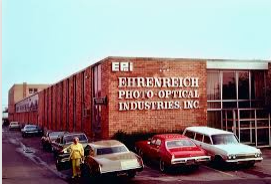
In 1954, he came to an agreement with Nippon Kogaku, manufacturer of Nikon cameras, lenses i and optical and scientific equipment, that made him the exclusive importer of that concern's widely used 35mm camera. In marketing the camera, Mr. Ehrenreich stressed quality and engineering.
His efforts helped to establish vigorous trade activity between the United States and Japan involving precision products ranging from highly complex optical goods to special purpose machine tools. In 1962 Mr. Ehrenreich recieved a citation from the Japanese Government for outstanding promotion of JapaneseAmerican trade.
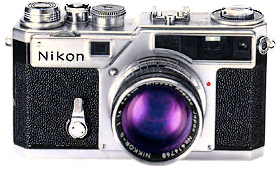
The association between the Ehrenreich concern and Nippon Kogaku—nearly 20 years—is the longest between an American marketer and a Japanese manufacturer. Mr. Ehrenreich began his career in the camera industry in 1931, when he opened the Penn Camera Store on West 32d Street in New York. He and a brother, Irving, operated the store until 1954.
One of the Ehrenreich company's Marketing strategies for the Nikon was to have professional photographers use and endorse it. In addition to the Nikon line, the company's products include Bronica, Durst, Fujica, Mamiya, and Metz photographic items.
Another Incredibly Talented Guy By The Name Of Marty Forscher, 1921-2009 —
The Dean Of Camera repairs and alterations. You had a Nikon and wanted a certain Minolta lens to work with it? No problem, see Marty. Thats what it was like before the internet, it changed all things, some for the good, some for the bad and there is the whole story of the industry as I saw it in the beginning years.
Served in the Navy photographic unit headed by Edward Steichen. After the war, he opened his own repair shop, first on Lexington Avenue, but later at the 37 West 47th Street location that everybody knew. Professional Camera Repair wasn’t just a repair place…it was one of the ‘hubs’ of the New York photo business.
The old bulletin board in the waiting area was filled with assistant’s resumes, studio shares, camera ‘for sale’ notices, photo show openings and just about everything else you could imagine that related to photography in this city. And when Marty wasn’t simply fixing cameras, he was always coming up with ways to make them do things that the manufacturers didn’t think of…or inventing his own stuff…
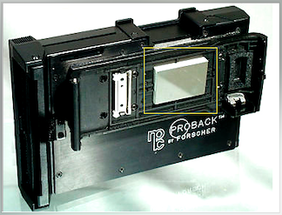
The most famous of which was the Forscher ProBack. What a simple idea…a Polaroid back for a 35mm camera…except is wasn’t. There were all sorts of optical reasons why you couldn’t simply slap a Polaroid back onto a 35mm camera, and before the ProBack, the only way to get an instant image from a 35mm camera was to slap on the ungainly monster known as a Speed Magny.
For those of you who spent any time in a physics class, you can imagine how the long optical path of that periscope-like device would suck up light…in this case, about about 5 stops worth…so a shutter speed of 1/250 second effectively became 1/8 second…not very useful at all. Marty had another idea…he invented a system that used a free-floating fiber optic lens to transfer the image from the camera film plane directly onto the Polaroid film plane…
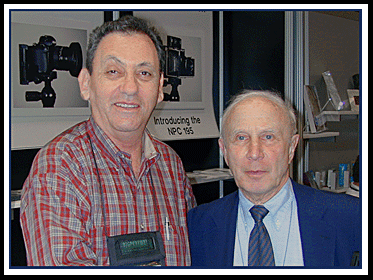
Martin Hubert Forscher was born in Manhattan on Nov. 25, 1921. He died on Sept. 30, 2009 in Pittsfield, Mass. He was 87 and lived in Pittsfield. He is the Dean Emeritus of the Camera Repair and Innovation business. No doubt about that.
His contributions to the industry are too much to mention in this humble venue. I met him many decades ago in NY and usually saw him once a year at the PMA. (see picture)
Watching him work was a distinct honor and maybe with the addition of some input from my uncle’s Morris and Eddie caused me to become interested in taking things apart. The difference is he could put them back together. Hopefully in my next life I will tackle that half of the equation.
For more than 40 years, Mr. Forscher ran Professional Camera Repair Service in Midtown Manhattan. Founded in 1946, the shop was a Mecca for generations of camera owners, from the world’s most celebrated fashion, advertising and news photographers to wedding portraitists, threadbare students, bejeweled celebrities and anxious tourists.
Many fine Pentax and Minolta lenses worked on Nikons and Canons. If you had a Nikon and wanted a hot Minolta 250 mm ƒ5.6 mirror lens to work on your Nikon he could do it. Albeit things were possible in the old days and he was the master machinist and problem solver. I borrowed one of those Minolta 250's and what a street shooter combo that made. Little bigger than an 85 mm and a 250. With today's propriety branding built in, nothing fits nothing!
In World War II, Mr. Forscher worked in Washington as a repairman for the Navy photographic unit run by the eminent photographer Edward Steichen. After the war, he opened Professional Camera Repair Service. Originally at 480 Lexington Avenue in Midtown, the shop was located for many years afterward at 37 West 47th Street. Mr. Forscher had sold it to colleagues when he retired in 1987. In 2001 the shop went out of business. The photographic community heaved a collective shudder of panic, he was the master of repair.
The Polaroid's he adapted for 35mm and medium format opened the eyes and the doors for professional photographers. Just making it work with the NPC line of backs is more than you might think. It took fiber optics when few even knew what they were. In this copy cat world, his approaches and ideas were out of the box and they worked. The shape of a 35mm SLRS film track and viewfinder eyepiece mean that the focal plane for Polaroid material lies at least 12mm behind the focal plane for conventional film. With the emulsion lying so far away you can never achieve proper focus. Various solutions were attempted. Few worked. In the early '80s, Marty Forschner had the brilliantly simple idea of bridging the gap with a spring-mounted block of fused fiber optic bundles.
It could be said he was a man before his time and after it too… Marty's first job was with the National Geographic. The Big Cheese (Gilbert Groxxxx) could never remember to extend the lens on his Leica before making a picture, and gave the camera to Marty to make something which would always remind him to extend it. Instead, Marty fitted a collar around the lens barrel so it couldn't be collapsed at all. They fired him on the spot. So he opened his own shop.
Eddie Adams...1933-2004 The final shot, NEW YORK - September 19,2004 -
 Eddie Adams, a photojournalist and a Pulitzer Prize-winning Associated Press photographer is best remembered by a photo of a communist guerrilla being executed in a Saigon street during the Vietnam War.
He died Sunday, the 19th of September. He was 71. Mr. Adams died at his Manhattan home from complications due to amyotrophic lateral sclerosis, or Lou Gehrig's disease. I knew him well.
So I'm sitting next to this guy at a Nikon Bash in Vegas and your wife says “ Who is that gentleman you are talking to”. "Oh, thats Eddie Adams, he's probably one of the most honored photographers of our time. I want you to meet him”.
So my wife leans over and I introduce him, as one of the most influential photojournalists of all time and whose work I deeply admired. He just smiled, took it in stride, and she commented later how quiet and reserved he was. Our conversation turned to Hemingway for some reason and we ordered drinks.
I took this shot, maybe one of the las while we were having a drink together, I had a secretive drink from another fisherman by the name of Ernest Hemingway. Hemingway was truthfully and devoted to Scotch, even bootlegging it during prohibition.
He only drank a very specialized Mojito on his boat the “ PIlar” , a drink which was invented by his skipper. All other stories of him and Mojitos are not true and even the Cuban version claiming he drank it in Cuba was a forgery.

I explained even though he has photographed most of the influential people on the planet, in the industry many just ask, whose that guy standing next to Eddie…
TOP DRAWER PULITZER PRIZE WINNER — He received a Pulitzer Prize for his work. He's well known in journalism, corporate, editorial, fashion, entertainment and advertising”.
He's been featured in Time, Newsweek, Life, Paris Match, Parade, Penthouse, Vogue, The London Sunday Times Magazine, The New York Times, Stern and Vanity Fair, in addition to his photographs of 13 wars.
My wife was impressed and they chatted. So my wife asks me “ Does he always wear a hat indoors ". I said, "He can wear a hat anywhere he wants".
He was awarded the Pulitzer Prize in 1969 for his startling photograph of the execution of a Viet Cong from a single photo taken Feb. 1, 1968, the second day of the communists' Tet Offensive, in the embattled streets of Cholon, Saigon's Chinese quarter.
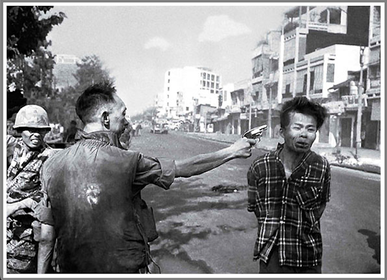
I found this tidbit on PNN's page. and I quote,
- "Eddie Adams is a man to whom Clint Eastwood said, "Good shot”
- Fidel Castro said, "Let's go duck hunting”
- The Pope said, "You've got three minutes”
- His portraits of Presidents ranged from Richard Nixon to President Bush
- And those of world figures included Deng Xiao Ping, Anwar Sadat, and Mikhail Gorbachev.
- Mr. Adams won a 1969 Pulitzer Prize for the Saigon execution picture, among the more than 500 honors he received in his career, including a 1978 Robert Capa Award and three George Polk Memorial Awards for war coverage.
The picture I took of him is him. A very natural, quiet, reserved individual… We were at the Harley Davidson Club in Las Vegas. He was resplendent in black, with the fedora always worn squared to the head. I sat next to him at a many of the Nikon bashes and had the chance to chat with him. He was not as short with people as many have said, he was just great at what he did and when working very focused. The 2005 Nikon Calendar has many of Eddies imagery magic. It was an honor to take what might have been the last shot —
Paul Conrad Buff 1934 - 2015 — Alien Bees and Lightning and the next words were a name, Paul Buff. An innovator in the studio flash business and known for his great service and accommodating the customer, few other companies came close to their level of service. I modeled my aftermarket business after him. Paul and his wife Deborah resided in Nashville Tn.

They also had a farm house in Theodore, AL where they were visiting for a while at the time of his passing. Paul was a man of many talents. Paul was a self taught, multi talented man. He mentored many people thru out his life and always did for others without wanting anything in return.
Few knew this. Paul started his own music recording business call PAL in Cucamonga, CA in the 60's. He recorded many people. Also later during Paul's time recording others he and now deceased Frank Zappa were very good friends whom was an iconic legend in the music industry as well. Paul later on decided to sell his recording studio to Frank Zappa and move to TN.
He decided to get into Photography. He read all about it...and wanted to create Professional Mono lights unlike what was out there already. So he started that up in his home and Paul later became an icon and number one in that industry up until the time he departed. His photographic company is still working and going on. There will never be another inventor or creator of products or an engineer that could fill his shoes. There was only one Paul Buff, he was ahead of his time, and till today his products are universally accepted and utilized.
THE BEGINNING OF THE END
CHANGE IS BOTH GOOD AND BAD — The entire industry as we knew it has died with the demise of the retail camera store. We went from selling product, teaching, training, seminars, comforting mess ups, fixing bad work in the lab, passing knowledge on to customers with classes and a learned higher level series improving the people skills and their science of photography, the art of light… We had good karma, loyal customers and always gave more than they expected…
We went to cellphone photography, the popularity… selfies… who doesn’t love one self? And the ability to show the world. We became the buy it, use it, abuse it, and throw it out generation. I simply do not buy high end anymore on some items.

For the ten thousand dealers, closed doors and for some bankruptcy. We had many customers and friends, photo trips and seminars, thats all gone now.
Twenty years ago the average attendance at the PMAi trade only show was 35,000 people from all over the world, and took a week to go through it in Vegas.
Five days on the floor which took the entire LVCC both levels and no computers or cell phones in those days. Radio shack mini-walkie talkies were the communication. I still have mine. Doesn’t work but its impressive on the shelf.
Few independent Camera stores without a lab survived the onslaught of the big box, the web and cellphones. Something like less than 450 independent stores are left in the entire country. The pic at the top is from my last convention and roundup…thirty-three trips there.
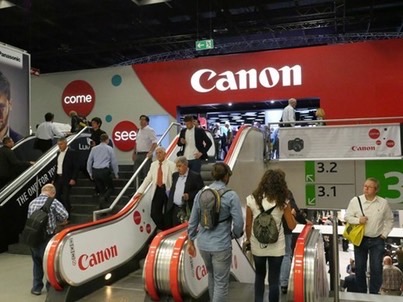
TRADE SHOWS — The Photo Industry Vegas Trade Only shows are gone, replaced by the CES, which is all cellphones, TV’s, toys, computers and gaming in addition to about 50,000 companies selling cell phone covers. Photography is now a state of electronics, where at one time it was a country all its own and covers and extra batteries are hot.
BASICALLY IT IS CHINA ON DISPLAY — The majors (Nikon and Canon, SONY and Fuji, Panasonic) knowing there aren’t enough dealers to support the thousands of dollars it cost to do a show went to retail shows, smart move.
The retail shows allow the reps get to talk to thousands of end users. To my knowledge the public or retail show at the Javits in NY and one in Anaheim are whats left in addition to trade specific (Wedding Seminar - Kelby Photoshop - and Pro Organizations) which are shrinking in attendance as well.
THE WEDDING MARKET - CELLPHONES — The wedding market is crippled too. I never took on low end Weddings, left them to the warriors, the cheap 100-300 dollar end of the business is not a means of survival. If you did fifty-two weddings a year at $200 dollars you didn’t make the poverty level. Thats a part time job, and if you edit a lot it’s a five dollar an hour job and a lot of liability.
Then you walk in the hall and see disposable cameras on the table, and everyone has a cellphone. The millennial’s, brought up on smart phones are not traditionalists. Few aftermarket sales of albums and coffee table books cut into profit. You give them a decoded disk and they will make their own or not care at all.
The better cellphones have cameras equal to the point and shoot which killed that market. We sold ten point and shoots to one DSLR. People spend 1000 dollars for a phone they’ll dump in two years but won’ t buy a decent camera for a lifetime. The camera was inconvenient and the phone glued to their head is their communication lifeline.
🌇 CANON IS DOWNSIZING AND PUTTING DEALERS ON NOTICE — CANON USA has updated its authorized dealers list, removing dozens of dealers from its network, this change took place on February 13 and initially involved 86 authorized dealers; however, Canon reached out on February 18 to clarify that certain dealers had been removed due to ‘ administrative errors’ and that they had since been added back on to the list. ( That means a significant order for Canon got them off the sh*t list)
Sources speaking to the website claim the changes were made as a way to cut Canon USA's operating costs. Online-only dealers and small stores were primarily affected by this change. Canon says that it added back in some dealers, including military exchanges, which were initially removed by mistake.
As of February 18, a total of 71 authorized dealers had been removed by Canon, including destinations like 33 Street Camera, Maui Digital Imaging, Rochester Institute of Technology, Santa Monica Camera, Camera Center of New York, B&C Photo and more. New York and California experienced the largest number of removals.

ELECTION WORK, SPORTS, POOLING AND RETAIL — Time to punt. After the really sick two election cycles, I am off the list for working with politicians. No more election paid work as a shooter. Getty and others get the gigs. No mas, No mas… It’s a circus, competitive even with credentials. Don’t think for a second when a critical shot can happen you don’t get bumped, pushed or shoved out of the way. SEE SARA PALIN — Several years back I covered Sara Pain-land, a VP candidate for a month, on tour in Florida. Never again, you learn a lot backstage, the things voters don’t get to see. I have never witnessed a more dysfunctional screwed-up family like this one.
SPORTS ALL SEWED UP WITH CONTRACTS — We have little or no Major Sports coverage anymore as it is all contracted, as it is all Press pools, Getty, Reuters, etc, and frankly when I covered the Tampa Bay Buccaneers during preseason my temperature gauge attached to my shirt registered 115 degrees on the field and at my age now (78.8) thats asking for a heart attack and thats not joking. The kids can have it and I might add what it pays. I did however later on get the heart attack.
Our hockey team is closed environment and pooled, and our baseball team is so screwed up, and more shooters than customers. And they are fighting for a new stadium, a joke, you win first then ask for a stadium.
WHERE HAVE ALL THE CAMERA STORES GONE? — Business wise a camera store can be a financial disaster these days. At one time Pinellas County, FL and Hillsboro County, FL had eleven full line camera stores surrounding Tampa Bay including mine. Almost one camera store for every gun shop. Today there are NO camera stores, but hundreds of gun shops. Both retail and pawn stores selling guns. I was in my prime an active wing, skeet, trap, and competitive IPSC three gun combat shooter, but thats not what the bulk of these gun stores are selling today. War weapons, killing tools…
BIG BOX STORES — At the yearly trek to Vegas, for the PMAI trade show we met with our Nikon Representative, who became the US sales manager. He told us about “Big Box Stores” and the effect they would create eventually dominating and controlling the US retail market. For every flagship pro camera level sold, the big box stores sold a hundred newbie or entry level cameras. Now they don’t sell jack sh*t. They sell phones, more profitable.
HE WAS RIGHT…AND… THEN CAME AMAZON AND SHOPPING CHANGED — . Needless to say, what I spent on gasoline, finding a parking spot a mile from any stores front door and mixed shopping meaning five stops and starts, and that parking on a 95 degree day with a heat index of 105 was no fun. The gasoline saved is enough to pay for my prime membership. Heat stroke avoided, thats just age. And their delivery I would rate at 98 % and on time.
QUALITY IS DOWN, AND THE CHEAP COMPETITION HAS RISEN — Buying on the web is where the money went. B&H and Adorama own the industry, a billion dollar one. Also the market items are not the same stuff made in the USA years ago.
The last independent retail camera store dealers, are mainly selling Chinese disposable products to maintain profit but those customers are dwindling as the cellphone allows cross shopping and seeing who has the best pricing. Most eBay stores are shells, just order takers, no warehouses, no facilities, no staff, no overhead. pallet delivered straight from China.
CAMERAS REACHED A PLATEAU OF “SUFFICIENCY” SEVERAL YEARS GO — Almost any camera released in the last 5 or so years is more-than-good-enough to capture almost any subject, and do it extremely well.
INTEREST IN PHOTOGRAPHY IS WANING — There was a time when peer pressure and curiosity had everyone out buying their first “real” camera, but almost anyone who wanted to try photography now has, and most of those people won’t feel the need to buy another camera for a very long time (if ever) because they’re not actually interested in photography any more. But show and tell with a cellphone is the method of communication.
SOCIAL MEDIA CHANGED THE LANDSCAPE OF PHOTOGRAPHY — Elevating self-documentation into the main photographic “art form,” social media made proper cameras less necessary for the kinds of photos that most consumers want to take. As noted photographer Wong puts it, “You don’t need 61MP for your selfie photographs, you don’t need ISO100,000 to shoot that slice of cake, and you certainly don’t need a super-telephoto lens to shoot your cat licking her paws or you dog licking his butt.”
PHOTOGRAPHY IS STAGNANT — In my view, the vast majority of modern-day photographers are doing what is safe and known instead of breaking new ground. In what is probably the most controversial point of the Wong’s whole video, he says, “I don’t see anything truly thought provoking and revolutionary from the work of today’s photographers.”
John Williams - MANUFACTURERS REPRESENTATIVE — “People come and ask me what happened with Showcase, an ATLANTA company who’s been in business for 40 years, and the answer is that the curve between making a little money and losing money has intersected, so now we’re at the point we’re not making but losing,” says Williams. “And a business can’t be sustained very long if you’re losing money, so that’s kind of where we’ve arrived.”
“It’s a very interesting from an economic view-point where you have essentially a city of almost 5 million people and here we are the only photo-video specialty store in the city with a 40 year track record and we found that we are unable to sustain our business in a profitable fashion.”
#1: AN “UNEVEN PLAYING FIELD” — “The first thing is that we’re all operating in an uneven playing field which has been influenced by the failure of states, in this case Georgia, to require the collection of sales tax from retailers operating outside of state,” “Now I can tell you that the state is collecting their 8% from me, and that in many cases far exceeds the percentage of profit that I’m making on merchandise. The state makes more (profit than Showcase) on many of my sales, which strikes me as being an unsustainable number.”
#2: INFORMATION BOOM — “The second issue has to do with the amount of, shall we say, digital information that’s now available,” Williams says. “In the old days customers would sometimes seek information or seek pricing for a product by using one of the several photography magazines that were available, so they thumb to the back, find the product and see what the price was in the back of the books.”
#3: MANUFACTURER MARKETING — “The third unsustainable issue is that manufacturers have come up with a marketing strategy that involves rebates, often referred to as instant rebates, when we take them out immediately,” says Williams.
“As an example a $1,000 camera might have a $200 instant rebate so the way it is set up to work is that, I have a choice whether to offer the rebate or not. But I can assure you that the consumer knows there is a rebate and I’m having a gun held to my head and told by the manufacturer you basically have to offer this to your customers.”
“Here’s how it works: I sell the $1000 camera to the customer and then I deduct the $200 instantly, so $200 of my money is gone. In order for me to collect the rebate from the manufacturer I have to file various documents on a timely basis and hope that they honor and fill those requests in a timely basis. That could be weeks to months so in a fact they’re holding my money for weeks to months. Now when they reimburse me for the $200 instant rebate they do not reimburse me 100%. The way it works is they reimburse me 80%, so it’s an 80-20 arrangement where the manufacturer reimburses me $160 and I’ve essentially given up $40 of my money on the sale.”
THE THEOLOGY OF CHANGE — Film was eaten by digital image making, and that was eaten by digital image creating, manipulating and sharing devices. But like film, digital image making devices are not “ one”.
It’s just not what the “ masses” are looking, seeking. They have moved from popular, the realm of enthusiast only to sales driven by people who just want to capture a moment, be it with friends or in a place, or a selfie, and phones do that better than any other type of digital camera.
And their instant and, more importantly, integrated connection to social media and the ability to tweak and share closes the loop. The bump was when they were the only way to capture reasonable digital images, but cameras in phones have more than made up for the quality gap for most consumer uses.
So many camera companies gone with the wind like Rolleiflex, Minox, Contax-Yashica, Minolta, Konica, Mamiya, and Bronica, was to be expected given the consumer market being so fickle. The rapid rise of the Japanese Yen changed everything after 1990. The future will be a test of resolve for the Japanese companies as to how long they can maintain profits. There is a global market for consumer cameras but not if the prices keep going-up; like now.
OXYMORONIC MOVE OF THE YEAR — With that said the next question: if the Chinese decide to step-in to save an ailing Japanese camera company; as with HASSELBLAD of Sweden which is now HASSEL REALLY BAD of China. Like US hedge fund saving LEICA a company that has nine lives? Or are they just Zombies?
NIKON DID POORLY WITH LOW-END — Nikon itself has said that its imaging future is in selling pro and enthusiast-level bodies at far higher average prices than the point-and-shoot and entry-level DSLRs that padded their profits in the aughts and early 2010s. They can sell far fewer $2500 MILC bodies with much higher margins than a $500 DSLR kit, and then sell that MILC buyer another $5K in lenses. That’s the way forward, because the bottom end of the market is gone, happily shooting away with their iPhones.
SMARTPHONES DO TWO JOBS — CAPTURE AND TRANSMIT — Retrospectively, the smartphone can be seen as combining two killer devices — the PC and camera. It's what the general public wanted and, perhaps more than ever, the ability to share photos is possibly the most important feature.
As a result phone cameras, and their software, see heavy investment and rapid iteration. Progress is steep. With the likes of multi-billion dollar IT conglomerates such as Apple and Google snapping at their heels, camera manufacturers need to… stay on their toes!
With that in mind, the twenties are perhaps ushering in a second phase of the digital demolition of the camera market. This is something Canon forewarned, anticipating a reduction in the ILC market from what has been a consistent 12M units per year to around 6M. The gradual switch of consumers over to mirrorless will add further complications for lens manufacturers. If the Nighties saw a failure to transition to digital, then the twenties may well be about the inability to pivot to computational processing platforms.
Secondly, there's no getting away from the size and convenience of smartphones. A dual-prong approach that also invests in the smartphone sector is needed. You see Leica (with Huawei) and Sony doing this. Samsung saw no benefit in staying in the camera sector, instead focusing it's imaging energies on smartphones.
Where are Nikon and Canon in this space? Their silence is deafening and moves being made. Nikon is now Thailand and Sony is going total mirrorless with no more A-mounts.
FUTURE STRONG LEADERS SONY AND FUJI —
Fujifilm announced that it would invest $850 million into its Diosynth Biotechnologies division to increase the capacity to manufacture biologics which includes recombinant vaccines for COVID-19 and advanced gene therapies in the United States and the United Kingdom. A few days later, the company announced plans to close four major United States-based photography equipment plants in Greenwood, South Carolina. The move would also cut 400 jobs and consolidate the manufacturing to just one factory.
According to Reuters, today Goto announced that he is heading up a three-year, additional $11 billion investment plan in healthcare to cement the production of pharmaceuticals as the company’s largest center of revenue and profit and continue to diversify away from its photo business.
“Businesses like healthcare are like a deep, blue ocean,” Goto said to Reuters. “It’s not going anywhere.”
Goto aims to supply other drugmakers with what are called contract development and manufacturing organization (CDMO) and reduce the “magnitude of risk” from full-on drug development. Revenue from this division exceeded $906 million last year, which is almost twice as much as the previous year. Goto says he expects it to double again by 2024. Overall, the move to healthcare is designed to help move the company to an operating profit of 260 billion yen by fiscal year 2023. Healthcare is set to make up 103 billion yen of that total, which would make it the largest segment in Fujifilm’s holdings, and bypasses both materials and imaging.
In an interview with Asahi, Goto said that despite the company’s majority pivot away from the camera industry, he would not seek to divest away from it or sell it off. Because the company has decades of experience in photo chemicals and in layering technology — and it is still profitable — film will remain a major player in the brand’s assets. No mention of additional investment in imaging was mentioned, however, and with so much of Fujifilm’s attention focused on healthcare, it is unclear how important imaging is to the company’s long-term strategy.
As reported by Bloomberg, the pivot to healthcare and semiconductors was a major factor in Fujifilm’s finances during the last year amid the Covid pandemic, which boomed for the company. Meanwhile, the photography and digital imaging industries floundered.
“Health care and semiconductor materials will be our future earnings drivers,” Goto told reporters.